The Department of General Surgery at Akash Institute of Medical Sciences, Devanahalli, is a well-established and rapidly developing department, equipped with modern infrastructure and amenities. The department functions efficiently with a team of qualified and dedicated faculty providing round-the-clock services throughout the year.
The department is organized into multiple functional units led by experienced faculty members. Comprehensive outpatient services are available on all working days, catering to both new and follow-up patients. A wide range of emergency and elective surgical services, along with necessary diagnostic and therapeutic procedures, are carried out as per standard protocols.
The department actively contributes to undergraduate & postgraduate medical education, admitting students annually through NEET. Faculty members are trained in minimally invasive (laparoscopic) surgery, ensuring exposure to advanced surgical techniques.

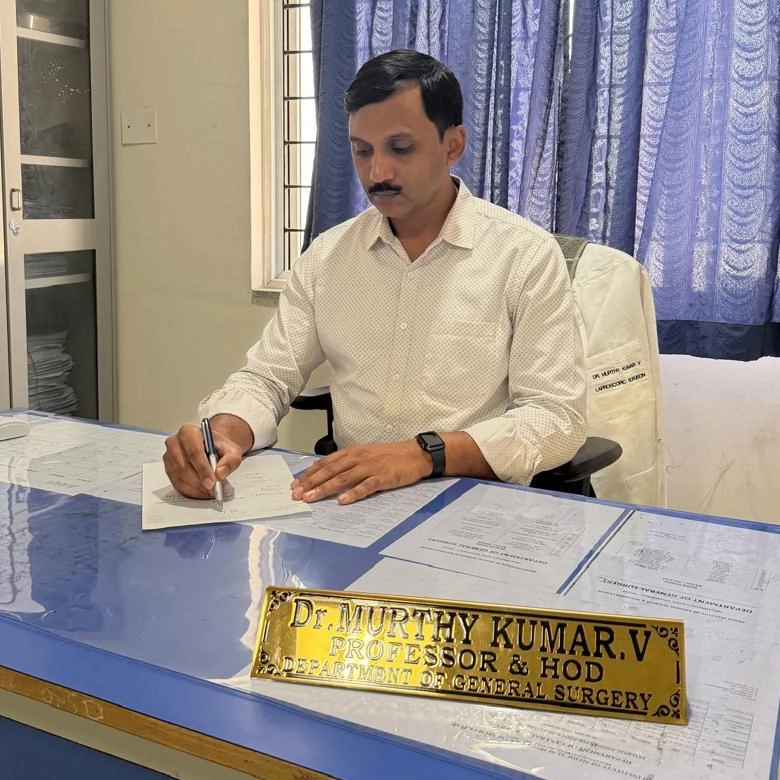
It gives me immense pride to share that the Department of General Surgery at Akash Institute of Medical Sciences and Research Centre is committed to delivering high-quality, patient-centered surgical care, education, and research. Equipped with modern infrastructure and a dedicated team, our department provides comprehensive emergency and elective surgical services round the clock.
We place strong emphasis on academic excellence, training both undergraduate and postgraduate students with a focus on clinical skills, ethics, and innovation. With continuous support from the institution, we strive to upgrade our facilities and adopt advanced surgical practices.
I sincerely appreciate the efforts of our faculty, residents, nurses, and staff whose commitment ensures compassionate and safe patient care.
Our mission is to provide ethical, evidence-based surgical care while nurturing skilled and compassionate future surgeons.
The Department of General Surgery is a tertiary care surgical center with faculty divided between several units of General surgery and support all subspecialties including Oncosurgery, Urology, Surgical gastro enterology, Neurosurgery & Plastic surgery. Currently the department consists Of 08 professors, 05 Associate Professors, 06 Assistant Professors and 10 Senior Residents. All the faculty above associate professor cadre are recognised as post-graduate guides.
The department offers both undergraduate and postgraduate programmes (M.B.B.S and M.S) and teaches 250 undergraduate students and guides 14 post-graduate students annually.
Post-graduate intake to start with was ten in the year 2021 and gradually increased to fourteen seats in the year 2025.

General Surgery Department functions as a comprehensive superspeciality center, delivering advanced, evidence-based surgical care across multiple disciplines including neurosurgery, oncosurgery, plastic and reconstructive surgery, urology, and surgical gastroenterology. The department provides specialized management of complex conditions such as traumatic brain injuries, intracranial and spinal pathologies, benign and malignant tumors, genitourinary disorders, and gastrointestinal, hepatobiliary, and pancreatic diseases. Expertise includes tumor resections with oncological clearance, reconstructive and microsurgical procedures, endourological interventions, and minimally invasive laparoscopic surgeries.
We offer a full spectrum of services through a well-organized outpatient department (OPD) for clinical evaluation, preoperative workup, and postoperative follow-up. Our team ensures 24/7 emergency surgical care for acute conditions such as trauma, perforation peritonitis, intestinal obstruction, and surgical emergencies requiring immediate intervention.
Elective procedures are performed in advanced modular operation theatres equipped with modern anesthesia and monitoring systems, ensuring optimal safety and precision. Separate dedicated operation theatres are available for each of these superspecialities.
With a strong focus on multidisciplinary collaboration, cutting-edge technology, and patient-centered care, our department is committed to achieving superior clinical outcomes while maintaining the highest standards of surgical excellence and quality healthcare delivery.
The postgraduate surgical training program provides structured instruction in teaching, research, and clinical practice. Didactic sessions cover General Surgery, Oncosurgery, Pediatric Surgery, Plastic Surgery, Neurosurgery, Urology, and Gastrosurgery, integrated with clinical departments. Students develop communication and academic skills through journal clubs, seminars, tutorials, demonstrations, and quizzes, along with hands-on training in basic surgical techniques and assisting laparoscopic procedures. They participate in teaching undergraduate students and interns, and engage in seminars, group discussions, and case presentations.
Training also includes preparation of audio-visual aids, posters, and manuscripts, and involvement in conferences and workshops. Students learn evaluation methods such as MCQs, SAQs, and OSPE, and prepare teaching modules. Clinical training includes weekly case discussions, ward rounds, daily service rounds, and grand teaching rounds, with mandatory logbook and diary maintenance. Ethical practices and biomedical waste management are emphasized. Rotations include extensive exposure to General Surgery, inter-unit rotations, and subspecialties like Neurosurgery, Plastic Surgery, Oncosurgery, Pediatric Surgery, and Urology. Completion of a basic research methodology course is mandatory, along with presentations and at least one publication.
The Department of General Surgery provides competency-based undergraduate training in accordance with NMC and CBME guidelines, integrating knowledge, skills, and professional attitudes. Teaching includes didactic lectures, small group discussions, bedside clinics, demonstrations, and skill-based learning in areas such as wound care, suturing, sterile techniques, and basic life support.
Students are exposed to core topics including gastrointestinal surgery, hepatobiliary disorders, trauma, burns, oncology, urology, and vascular conditions. Clinical training emphasizes history taking, physical examination, formulation of differential diagnoses, and basic management plans.
Learners participate in ward rounds, outpatient clinics, operation theatre postings, and emergency services to gain real-time clinical exposure. Emphasis is placed on communication skills, patient safety, ethics, and informed consent. Early clinical exposure and integration with anatomy, physiology, and pathology enhance understanding. Students are encouraged to engage in self-directed learning, seminars, and case presentations.
Assessment follows CBME principles with formative and summative methods including OSCE/OSPE, viva voce, AETCOM and written examinations. Maintenance of logbooks and reflective learning is mandatory to document competencies achieved. The department also promotes research orientation, professionalism, teamwork, and lifelong learning to prepare students for holistic patient care.
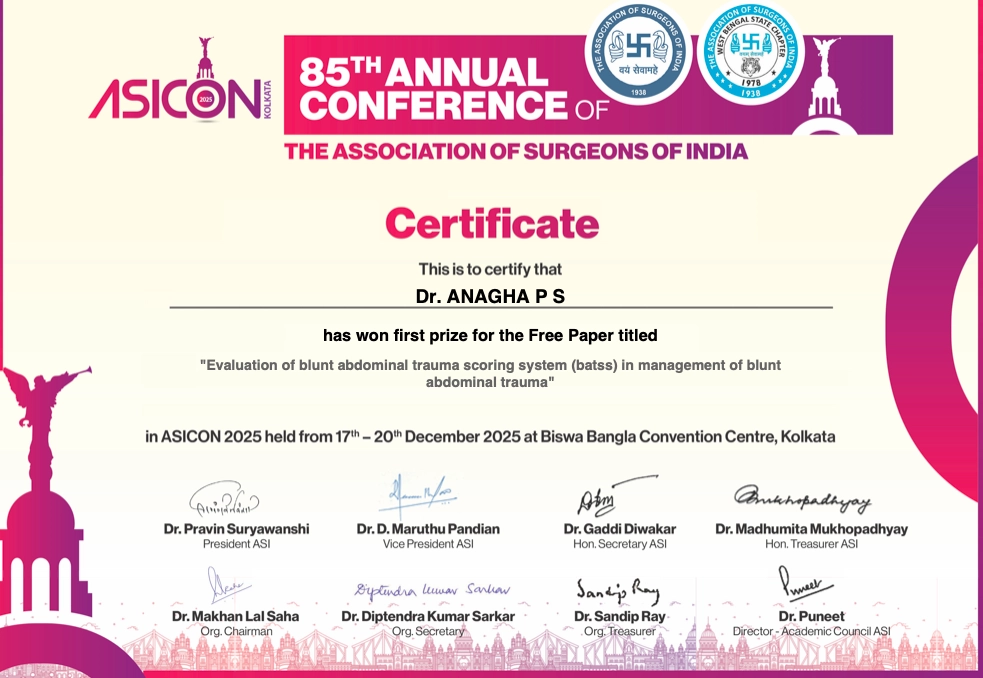
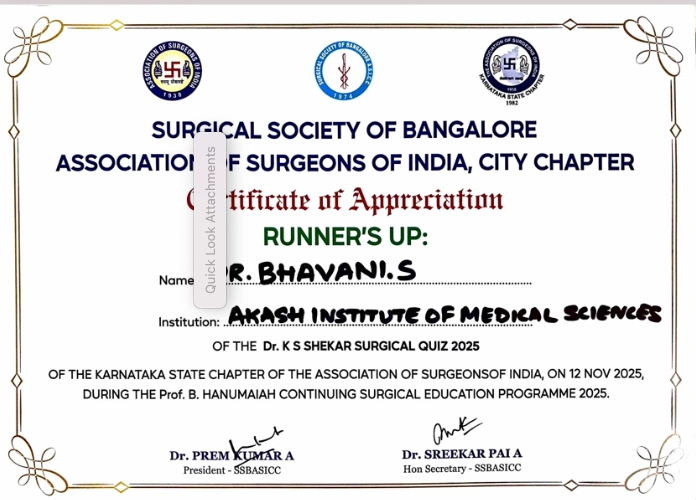
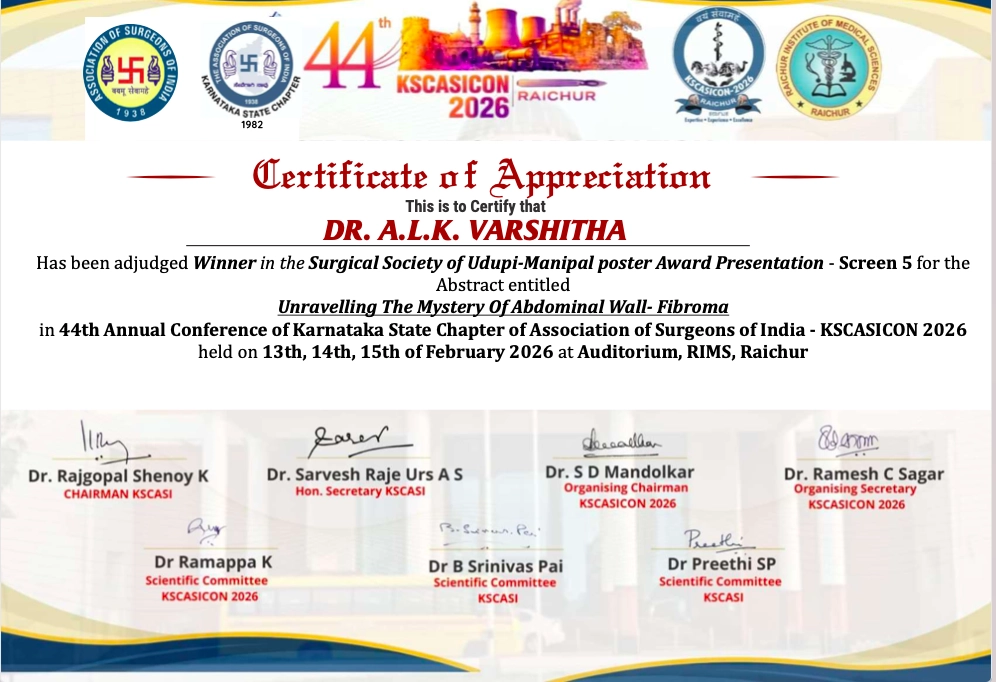
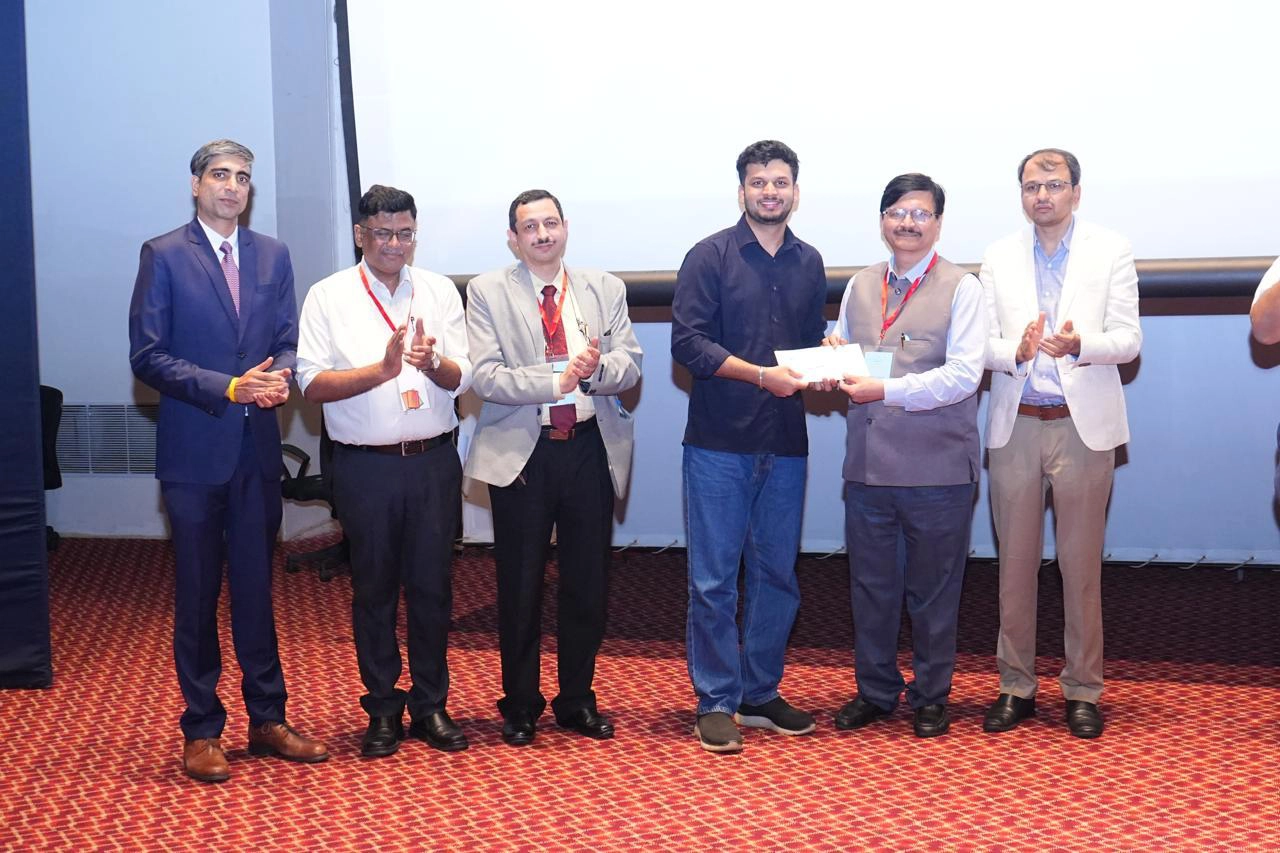
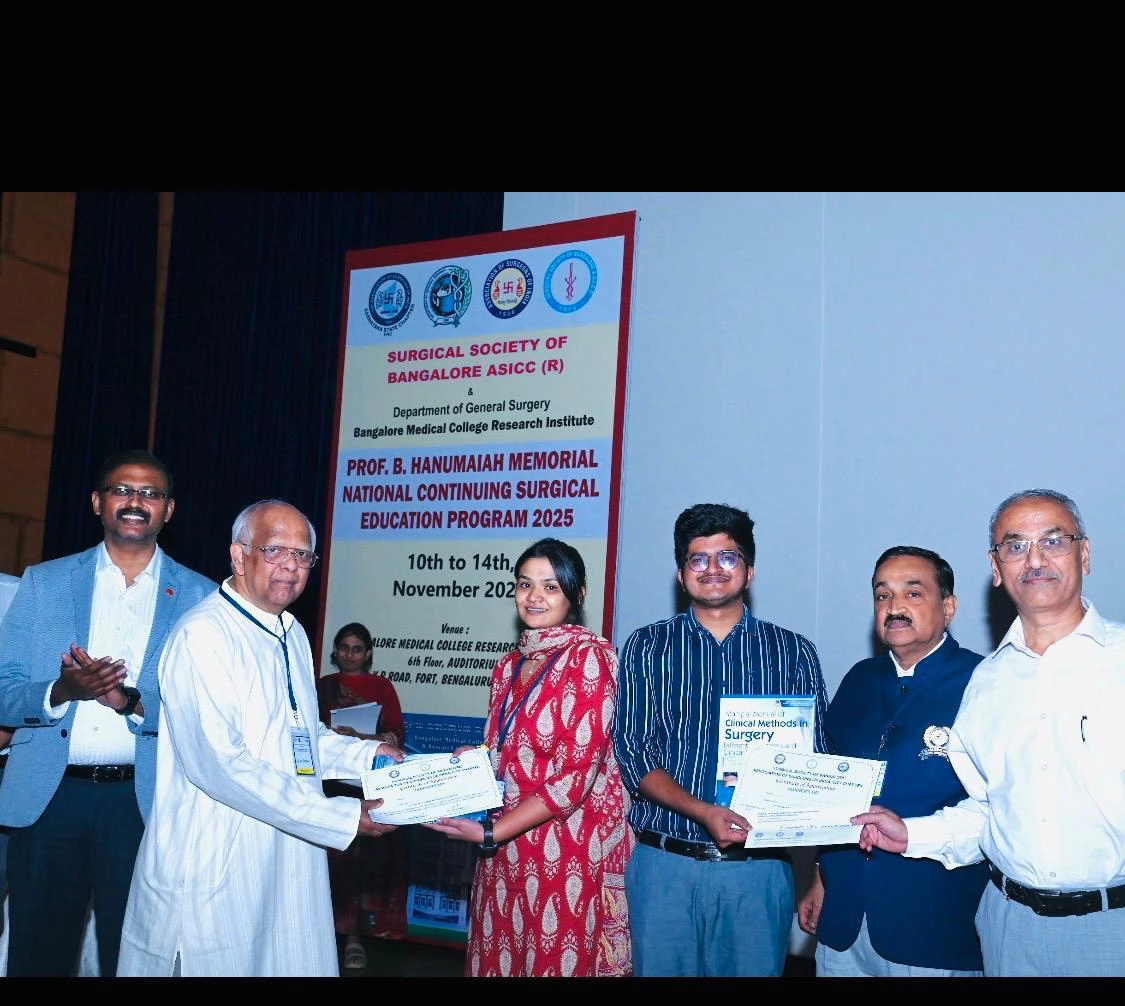
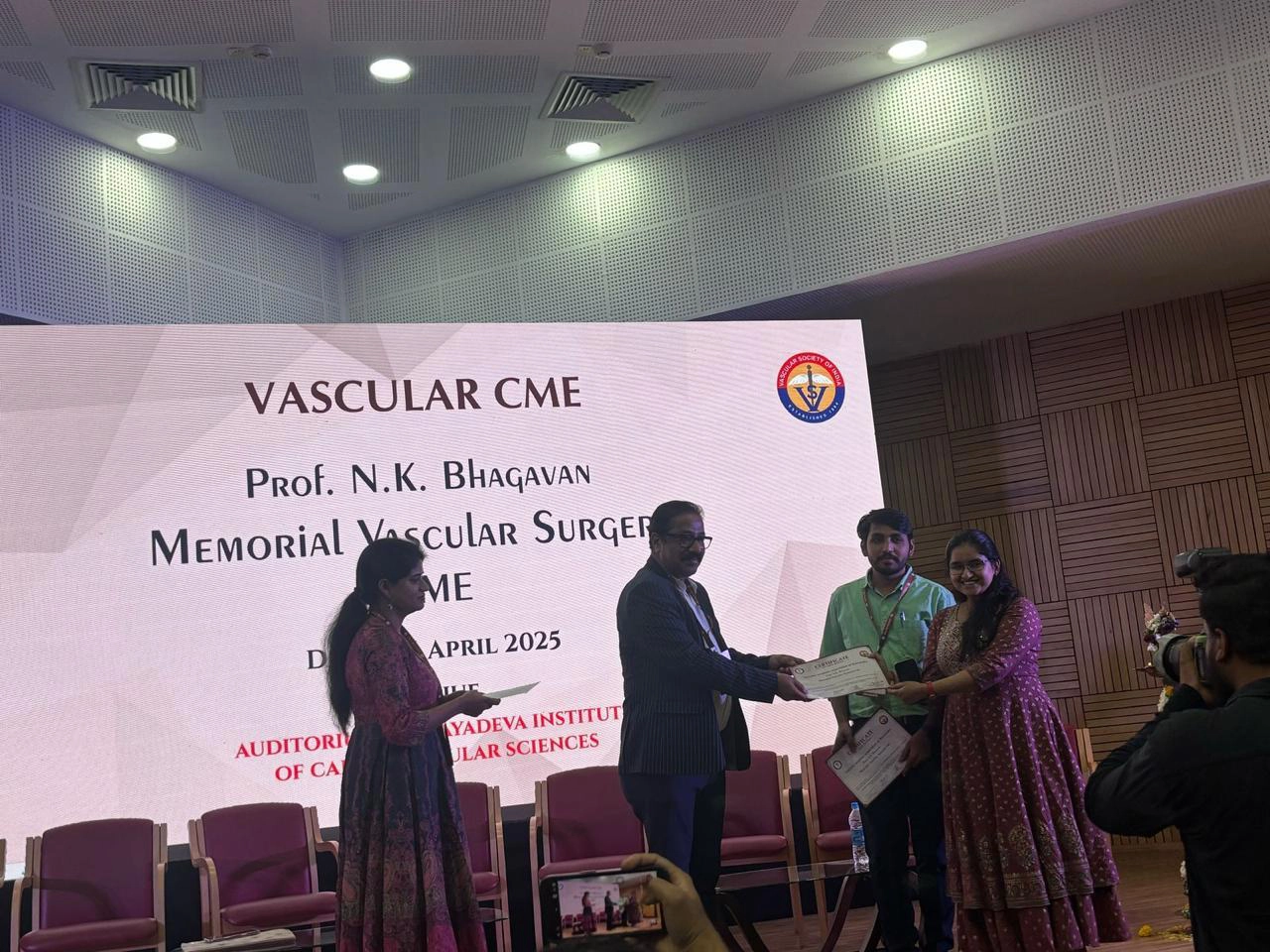
Our postgraduates have received several prizes in various conferences and national level participation.